
How to Generate Leads for Your Business – Lead Generation Tips & Ideas
What is Lead Generation in Marketing?
Lead generation in marketing is the act of gaining actionable customer interest in your business’s output. This typically involves a customer initiating a conversation or providing you with their contact information for follow-up regarding your business’s products or services.
For example, for a law firm to generate valuable leads, they might receive:
- A form submission from a potential client who is inquiring about their services.
- A phone call from a potential customer to set up a consultation.
- A direct message on social media asking about their rates.
- An email from a potential customer who is asking to schedule a consultation.
Thus, part of finding new business leads involves structuring a marketing experience that makes it easy for customers to engage with your company. If you’ve heard about demand gen and are wondering about whether you technically need demand generation vs. lead generation – you need both, and it’s not worth differentiating them at this point.
The Sales Pipeline Fuel: How to Attract More High-Quality Leads for Your Business
Attracting a consistent flow of leads is the lifeblood of any successful business. In today’s digital landscape, effective lead generation is a strategic blend of attraction (Inbound) and outreach (Outbound), focused intensely on providing value to your specific audience.
Among the many important components of your business, sales & marketing department is the one that forms the foundation of it. And what forms the foundation of sales & marketing, is the leads they gain. Getting a good number of leads in a fixed period of time is an easy or difficult task, depending upon the kind of techniques your sales personnel are using. With the advent of digital media, video marketing, digital techniques and social media, gaining leads has become more organized, but using these techniques in optimum ways is quite challenging, as competition is equal for everyone. So, if you are using these tools, expect the same from your competitors. Hence, the only option to achieve a great number of leads using the digital space is to put these tools and tips to best use.
We have been talking about these tools and tips, do you wonder what tools we are talking about? We don’t like making people wait, so here they are:
Use Social Media Channels differently
Social media platforms like Twitter, Facebook and LinkedIn are perfect for gaining leads. However, many complain that these platforms are not effective. Well that is because you are using these platforms with your standard operating procedures that aren’t very productive and have basically been exploited already. People are no more attentive towards to seeing the same templates, banners, taglines featured on social media. But something that will always work on social media in catching attention of the masses is your own opinion on matters, things, your product and other topics. Give it thought and you will that the only way of standing out among your competitors is standing with your product and your own opinion about it. That is the most unique you can get in harnessing social media to your benefit.

Direct Engagement
To build a wider base of leads, easy or the hard way, direct engagement always works. The simple reason behind is that the prospective customers you interact with, are humans and love to talk about their problems to those who can help. When you engage directly with the prospective customers, they share their requirements in a much more detailed way than they can do via emails, social media, or WhatsApp, for another simple reason that no one likes to type too much. Also, conversational discussion with the company is always better for them because it is spontaneous and goes into much more detail. To this point, we have generally been talking about interacting with the client over voice call. Other direct engagement methods are email, messages, social media engagements and more.
Stop chasing every potential customer. Instead, follow this structured guide to implement proven strategies that make the right leads come to you.
I. The Foundation: Know Your Target & Your Goal
Before launching any campaign, you must define who you’re talking to and what you want them to do.
-
Define Your Ideal Customer Profile (ICP) & Buyer Persona:
-
Go beyond demographics. What are their pain points, their biggest goals, where do they search for solutions, and what makes them choose one product over another?
-
The Quality over Quantity Rule: Focus on attracting qualified leads—people who genuinely need and can afford your product/service—not just general sign-ups.
-
-
Optimize Your Conversion Pathways (Landing Pages):
-
Every lead generation effort must direct traffic to a dedicated landing page (not your homepage).
-
Ensure the page has a clear, compelling headline, concise copy focusing on benefits (not just features), and a simple, short form. The fewer fields you ask for, the higher your conversion rate will be.
-
II. The Attraction Engine: Inbound Lead Generation
Inbound marketing focuses on attracting prospects by providing helpful, valuable content. It builds trust, authority, and generates higher-quality leads over the long term.
A. Content Marketing and SEO (Search Engine Optimization)
-
Create “Answer Content”: Author high-quality blog posts, videos, and FAQs that directly answer the common questions your ICP types into Google. This positions you as an expert and ensures your business appears precisely when a prospect is actively looking for a solution.
-
Master Local SEO: For local businesses, optimize your Google Business Profile (GBP). Encourage positive reviews, keep hours updated, and use local keywords in your website content (e.g., “Best Marketing Agency in Bangalore”).
-
Utilize Video Content: Create educational videos (tutorials, demonstrations, case studies) and host them on YouTube. Video is excellent for building personal trust and showing, not just telling, the value of your solution.

B. The Lead Magnet Strategy
A Lead Magnet is a piece of valuable content or service you offer for free in exchange for a prospect’s contact information (usually an email address). The best lead magnets solve one specific problem quickly.
-
Offer Checklists and Templates: These are easily consumable and provide immediate value.
-
B2B Example: A “Social Media Audit Checklist” or a “Project Management Template.”
-
B2C Example: A “First-Time Home Buyer Checklist.”
-
-
Host Exclusive Webinars or Masterclasses: Offer a free, live session showcasing your expertise. Webinars generate high-quality leads because attendees invest time, proving their serious interest.
-
Provide Free Trials or Demos: For software or service businesses, this is the most direct path. Allow prospects to experience the value firsthand, lowering their perceived risk.
III. The Proactive Approach: Outbound Lead Generation
Outbound strategies involve actively reaching out to potential customers. While often faster, they require precision and personalization to be effective.
-
Highly Targeted Cold Emailing:
-
Forget email blasts. Use tools to find contact information for people who perfectly fit your ICP.
-
Send a highly personalized email addressing a specific pain point unique to their industry or role. The goal is to start a conversation, not make a sale immediately.
-
-
Leverage LinkedIn Outreach:
-
Use LinkedIn to connect with decision-makers.
-
Post valuable content consistently to establish authority.
-
Engage in relevant industry groups and use personalized connection requests based on recent company news or mutual interests.
-
-
Strategic Networking and Partnerships:
-
Join local business groups or chambers of commerce.
-
Build referral agreements with complementary, non-competitive businesses. A web designer, for example, could partner with a copywriter for mutual referrals.
-

IV. Nurturing and Optimization Hacks
Capturing a lead is just the first step. The conversion happens in the follow-up.
-
Implement Lead Nurturing Email Sequences:
-
Immediately after a lead downloads a magnet, enroll them in an automated, multi-step email sequence.
-
Goal: Educate them, share success stories (case studies), and gently guide them toward the next step (e.g., booking a free consultation).
-
-
Incentivize Customer Referrals:
-
Your best leads come from your happiest customers.
-
Set up a formal referral program that offers a valuable incentive to both the existing customer and the new referred lead. This leverages built-in trust and accelerates the sales cycle.
-
-
Use A/B Testing on Key Assets:
-
Continuously test elements on your highest-traffic pages and forms. Test headlines, button colors (CTAs), image placements, and form length. Even small wins in conversion rate can lead to significant increases in leads over time.
-
-
Integrate Chatbots and Live Chat:
-
Add a chatbot to your website to instantly answer basic questions, guide visitors to the right pages, and capture contact information when they ask a complex question outside of business hours. This turns passive website visits into active leads.
-
By adopting a comprehensive strategy that combines the trust-building power of Inbound with the targeted speed of Outbound, your business can build a reliable, high-converting lead pipeline.
Attracting more leads is the heartbeat of every growing business. Whether you sell products or services, leads represent potential customers—the very people who fuel revenue, brand visibility, and long-term sustainability. Yet despite its importance, generating a steady stream of quality leads is one of the biggest challenges entrepreneurs face today. Markets are competitive, buyers are overwhelmed with choices, and attention spans are shorter than ever. This makes it crucial not only to catch someone’s eye but also to earn their trust and move them closer to making a buying decision.
When people talk about “getting more leads,” they often think it’s all about running ads or posting more on social media. But effective lead generation isn’t a single tactic. It’s a strategic ecosystem—a mix of psychology, content, smart digital tools, and clear messaging. You must understand who you want to attract, what they care about, and what would compel them to respond. And most importantly, you need a process that turns strangers into prospects and prospects into loyal customers.
Think of lead generation like planting seeds in a garden. You don’t just toss seeds into the wind and hope for the best. You water them, give them sunlight, prepare the soil, and check on their growth. The same applies to attracting business leads. When you prepare your digital environment, nurture audience relationships, and provide value consistently, your lead flow grows naturally—and sustainably.
12 Proven Ways to Generate High-Quality Leads for Your Business
Before you build your strategy, check out these 12 effective methods to quickly generate high-quality leads:
1. Direct Engagement
For businesses selling high-value products or monthly retainer services, directly engaging potential customers is highly effective. For high-volume, low-value products, this approach may not be ideal.
Reach out through social media, email, phone, or in person once a prospect seems like a good fit.
Example: A lawn care company in Houston can contact property managers of new commercial properties to offer services.
2. LinkedIn Lead Generation
LinkedIn users have twice the buying power of a typical web audience, making it perfect for B2B lead generation.
-
Connect with industry leaders and engage with their content.
-
Consider paid lead-gen ads with embedded forms for easy signup.
-
Only reach out if the prospect’s profile indicates your service meets their needs — avoid appearing spammy.
3. Advertise & Retarget
Use targeted PPC campaigns on Google, Bing, or social media to reach highly relevant users.
-
Example: A BMW dealership in Houston targeting “new BMW in Houston” searches.
-
Retarget visitors with display ads to encourage return visits and conversions.
Paid advertising may take time to optimize but can be extremely effective.
4. Ask for Customer Referrals
Encourage satisfied customers to refer friends or colleagues. Word-of-mouth marketing is highly effective.
-
Consider incentives like discounts for referrals.
-
Customer referrals reduce effort and cost while yielding high-quality leads.
5. Guest Blogging
Write guest blogs for industry-relevant sites to generate referral traffic and improve SEO.
-
Forms new industry connections.
-
Builds backlinks and increases referral traffic.
-
Target sites relevant to your industry and location for best results.
6. Rank in Search Engines (SEO & SEM)
Ensure potential customers can find you when searching online.
-
Conduct keyword research with tools like SEMrush or Google Keyword Planner.
-
Optimize content around high-value keywords.
-
Consider professional SEO services for competitive industries.
7. Answer Forum Questions
Engage in forums like Reddit or Quora to showcase expertise and attract leads.
-
Offer personalized, helpful answers with a call-to-action linking to your services.
-
Example: A law firm providing guidance on family law questions can generate consultations.
-
Strategically answering questions can also improve SEO.
8. Offer Free Tools or Lead Magnets
Provide a valuable free resource to attract leads.
-
Examples: eBooks, calculators, research guides, or free consultations.
-
Align the offer with user needs for higher conversion rates.
-
Collect contact information in exchange for the resource.
9. Influencer Interviews
Interview industry leaders to network and create engaging content.
-
Format content as videos, podcasts, or blog posts.
-
Share interviews on social channels or gate them for lead capture.
-
Influencer promotion amplifies reach and ROI.
10. Networking
Attend local or industry-specific networking events to nurture opportunities.
-
Build partnerships for lead sharing.
-
Discover guest blogging or influencer collaboration opportunities.
-
Look for indirect wins instead of expecting immediate ROI.
11. Create Email Offers
Leverage your existing email lists to convert passive subscribers.
-
Offer discounts, free trials, or limited-time promotions.
-
Collaborate with complementary businesses to promote through their email lists.
-
Example: Partnering with a non-competing business for mutual email promotions.
12. Comment on Blogs Helpfully
Engage on industry blogs and publications by providing insightful comments.
-
Include relevant links to guide readers toward your resources.
-
Be genuine and avoid spam; ensure your contribution adds value.
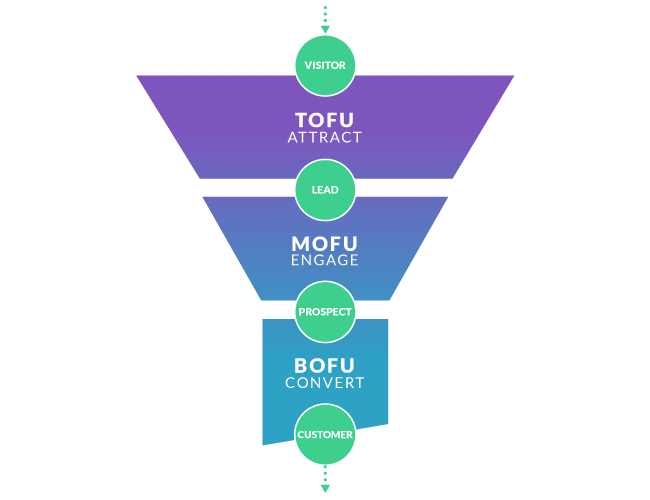
Lead Generation Funnel Overview
1. Top of Funnel (TOFU) – Awareness
-
Goal: Attract and inform
-
Content: Blog posts, social media, videos, infographics, SEO content
There are many marketing tactics you can leverage to attract people at this stage of the funnel, including:
- Blogs
- Guides
- Social media
- Podcasts
- Videos
Your focus should be on providing value so you can create a connection with your audience.
2. Middle of Funnel (MOFU) – Consideration
-
Goal: Nurture and educate
-
Content: Webinars, case studies, free guides, email sequences, comparison articles
Leverage your market research and find a pain point big enough that could interest your readers.
Then, create content that addresses this directly, including:
- Ebooks
- White papers
- Webinars
- Newsletters
- Tools
3. Bottom of Funnel (BOFU) – Decision
-
Goal: Convert and close
-
Content: Free trials, demos, testimonials, discounts, one-on-one consultations
The types of content that you can use at the bottom of the funnel include:
- Case studies
- Comparisons
- FAQs
- Demos
- Reviews
Attracting High-Quality Leads: Your Lead Generation FAQs Answered
The process of attracting leads can feel complex, but focusing on strategic effort and clear goals makes all the difference. Here are the most common questions about effective lead generation for businesses.
Strategy & Fundamentals
Q1: What is the most important first step before launching any lead generation campaign?
The most important first step is defining your Ideal Customer Profile (ICP) and Buyer Persona. You must know exactly who your perfect customer is, what problems they face, and where they look for solutions. Attracting the wrong lead is just as costly as attracting no lead at all.
Q2: Should my business focus on Inbound or Outbound lead generation?
A successful business uses a blend of both:
- Inbound (Attraction): Focus on this for long-term authority, lower cost-per-lead (CPL) over time, and higher-quality leads (since they came to you). Requires consistent content.
- Outbound (Outreach): Focus on this for speed and precision when targeting specific high-value accounts (e.g., highly personalized cold email or LinkedIn outreach). Conclusion: Start with Inbound to build a foundation, and supplement with Outbound for targeted pushes.
Q3: What makes a lead “high-quality”?
A high-quality lead is one that is qualified—meaning they have the need for your product, the budget to pay for it, and the authority to make the purchase decision. Focusing on quality ensures your sales team spends time on prospects most likely to convert.
Inbound & Content
Q4: What is a ‘Lead Magnet’ and what makes a good one?
A Lead Magnet is a piece of valuable content (an eBook, template, checklist, or webinar) offered for free in exchange for a prospect’s contact information. A good lead magnet must be instantly valuable, address one specific problem quickly, and be relevant to the product you eventually want to sell.
Q5: How does SEO (Search Engine Optimization) attract leads?
SEO attracts leads by ensuring your content (blog posts, service pages) ranks high on search engines like Google for the keywords your ideal customer is searching for. If someone searches “How to fix broken sprinkler system,” and your blog post provides the answer, you attract a lead who is actively seeking a solution you offer.
Q6: Why should I focus on creating a dedicated landing page instead of just sending traffic to my homepage?
A dedicated landing page is designed for one single purpose: lead conversion. It removes distractions (like navigation menus), focuses copy entirely on the lead magnet’s benefit, and significantly increases the chances of a visitor completing the form. Homepages are for browsing; landing pages are for action.
Outbound & Optimization
Q7: What is the biggest mistake businesses make with cold email outreach?
The biggest mistake is sending generic email blasts focused on the business’s features, not the recipient’s pain. Effective cold email is highly personalized, addresses a specific problem the recipient is likely facing, and aims to start a conversation, not immediately close a sale.
Q8: How often should I A/B test my lead generation assets?
You should continuously A/B test your highest-traffic conversion assets (main landing pages, primary forms, key call-to-action buttons). Small changes, like a headline rewrite or a button color change, can result in significant conversion lifts over time.
Q9: Why are customer referrals considered the best source of leads?
Leads acquired through customer referrals are the best because they come with built-in trust and social proof. The prospect already has a positive association with your brand via a trusted friend or colleague, shortening the sales cycle and dramatically increasing the conversion rate.