

How Is the Automotive Industry Utilizing Mobile Apps?
The automotive industry has come a long way since Carl Benz introduced the first gasoline-powered vehicle in 1885—a simple, stationary engine mounted on bicycle-like wheels. Back then, the concepts of efficiency, customer experience, and digital integration were almost nonexistent. Vehicles were purely mechanical inventions with limited functionality and no connection to the outside world beyond the road.
The real transformation began decades later with the introduction of Total Quality Management (TQM) by Toyota. This philosophy emphasized efficiency, consistency, customer satisfaction, and continuous improvement. The seeds Toyota planted reshaped the automotive industry and laid the foundation for today’s digitally connected vehicles.
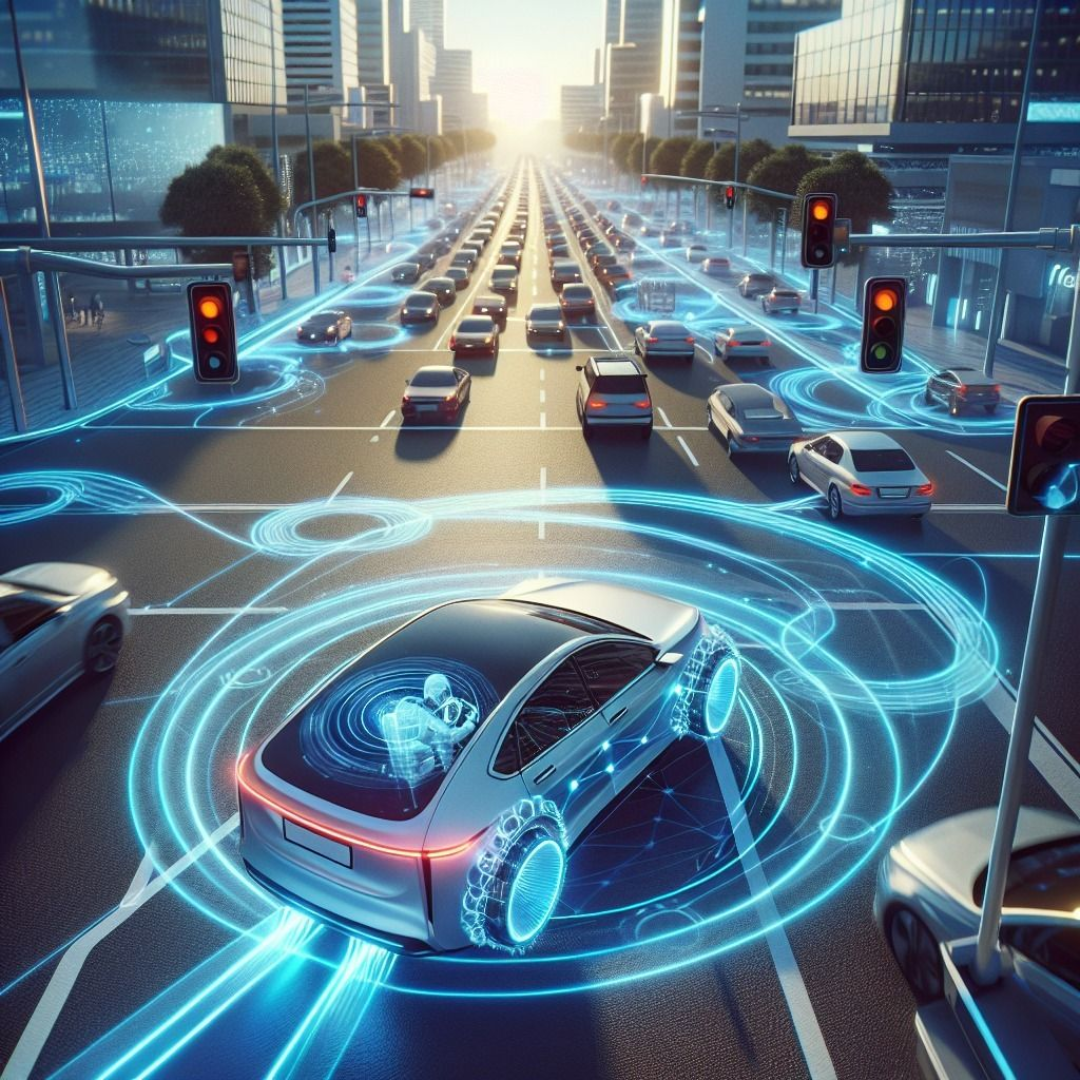
Fast forward to the present, the automotive sector has entered a new era—one driven by mobile applications, IoT, AI, and smart operating systems. Cars are no longer just machines for transportation; they are intelligent, connected ecosystems. The collaboration between automotive manufacturers and mobile app development companies has redefined how vehicles are manufactured, sold, serviced, and experienced.
One of the biggest milestones in this journey was the launch of Android Auto, which elevated car infotainment systems to an entirely new level. By integrating mobile operating systems with vehicles, the industry moved closer to a globally connected ecosystem—enabling IoT-powered vehicles, real-time data exchange, and smarter decision-making.
In this article, we explore the key ways the automotive industry is utilizing mobile applications across different operations and touchpoints.
1. Dedicated Mobile Apps for Consumers
Strengthening Customer Relationships Through Apps
Customer retention is a challenge across all industries, but it is especially complex in the automotive sector. Unlike retail or food industries—where frequent purchases, discounts, and offers keep customers engaged—cars are long-term investments. Customers may not buy another vehicle for several years.
To address this challenge, automotive companies have turned to dedicated mobile applications as a long-term engagement strategy.
Key Benefits of Consumer-Focused Automotive Apps
Dedicated automotive apps allow car owners to:
- Learn more about their vehicle features
- Track vehicle health and performance
- Receive maintenance alerts and reminders
- Access owner manuals and documentation digitally
- Get updates about software upgrades and recalls
These apps help customers use their vehicles more efficiently while strengthening brand loyalty.
Brand Engagement Beyond Ownership
For automotive enthusiasts, manufacturers such as Ford and Ferrari have launched digital magazines and branded apps that offer:
- Industry news and updates
- Upcoming vehicle launches
- Motorsports updates
- Brand stories and innovations
These apps keep users emotionally connected to the brand—even when they are not actively shopping for a car.

2. Smart Infotainment Systems and Connected Driving
From Traditional Dashboards to Smart Interfaces
A car alone is impressive—but a car with an intelligent infotainment system transforms the driving experience. Modern infotainment systems are designed to minimize driver distraction while maximizing convenience and personalization.
This is where mobile app integration plays a crucial role.
Android Auto and the Rise of Smart Infotainment
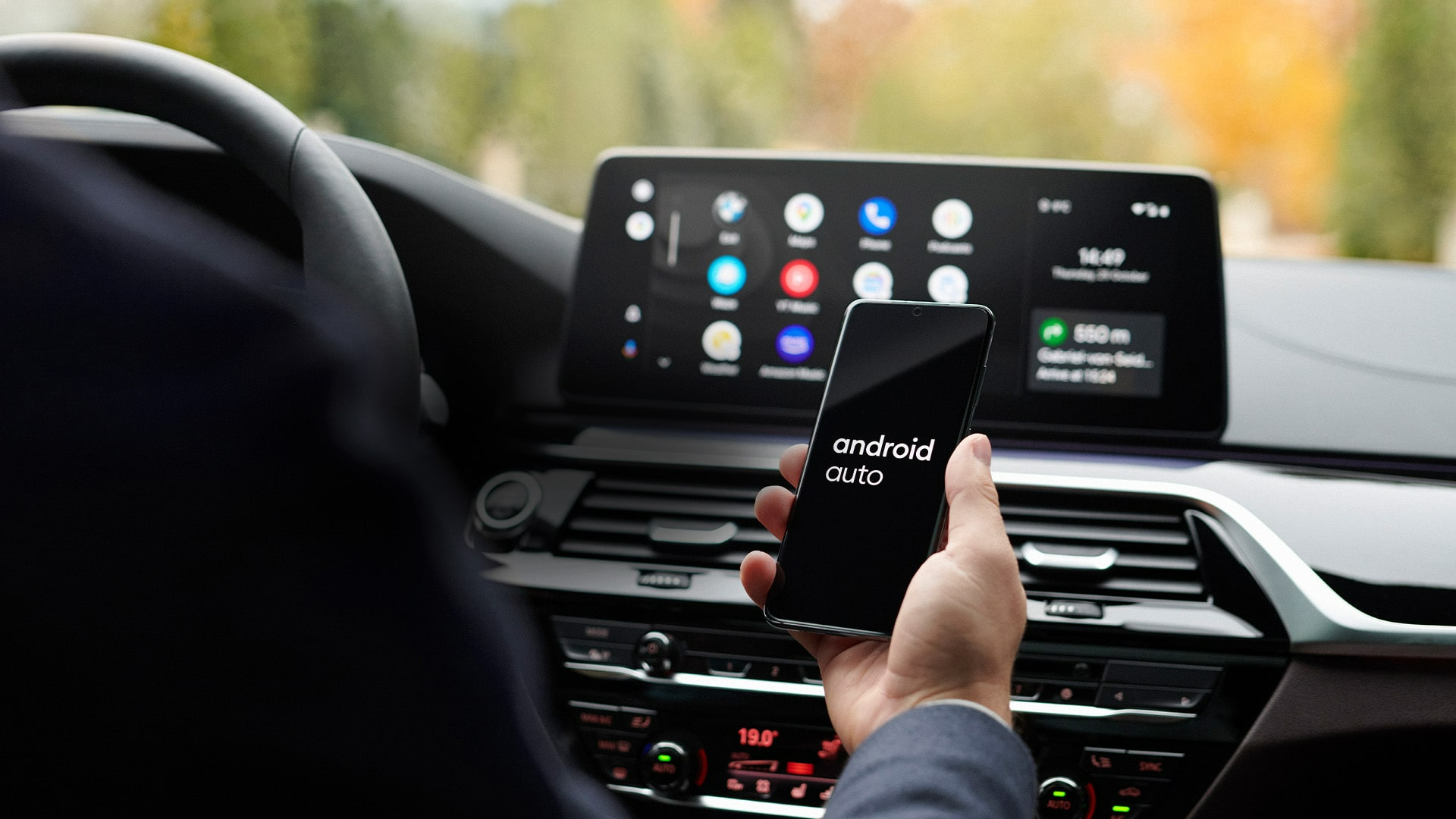
Android Auto has revolutionized in-car infotainment by bringing essential smartphone functions into a single, driver-friendly interface. Instead of juggling multiple screens or apps, drivers access everything seamlessly through the dashboard.
Key features include:
- Google Maps for real-time navigation and traffic updates
- Play Music and media streaming
- Hands-free communication (calls, messages, voice commands)
- Third-party app support for enhanced functionality
The system intelligently adapts to user behavior—suggesting routes, playlists, and destinations—making driving safer and more enjoyable.
Enhanced Safety and Convenience
By allowing voice commands and simplified interfaces, smart infotainment apps:
- Reduce manual interactions
- Improve road safety
- Enhance overall driving comfort
What once felt like science fiction is now a standard feature in modern vehicles.
3. Mobile Apps for Service Stations and Maintenance
Managing Maintenance at Scale
The automotive industry has enormous operational demands. For example, the United States alone has over 1 billion vehicles, all of which require regular maintenance, inspections, and servicing.
Managing this scale manually is nearly impossible.
How Mobile Apps Simplify Vehicle Servicing?
Mobile applications have streamlined vehicle maintenance by enabling:
- Automated service reminders
- Scheduled maintenance notifications
- Digital service history tracking
- Online booking for service appointments
Customers can download dedicated service apps provided by their car manufacturers or authorized dealers to manage all service-related needs.
Door-to-Door and Premium Services
Many premium automotive brands now offer door-to-door services through mobile apps. These include:
- Vehicle pickup and drop-off
- On-demand cleaning and detailing
- Software diagnostics and tuning
- Emergency roadside assistance
This app-driven approach enhances convenience while improving customer satisfaction.
4. Mobile Apps in Automotive Manufacturing
Monitoring Efficiency in Real Time
Manufacturing is the backbone of the automotive industry. Achieving efficiency, accuracy, and optimization is critical at every stage of production.
While technologies like computer vision and robotics dominate factory floors, mobile applications integrated with IoT play a supporting yet crucial role.
IoT-Enabled Mobile Applications in Manufacturing
Smartphones equipped with IoT-enabled apps are used to:
- Track real-time production data
- Monitor machine performance
- Capture quality control metrics
- Feed data directly into centralized systems
These apps collect data and transmit it to corresponding nodes, ensuring seamless communication between departments.
Mobile Apps as Advanced ERP Systems
In many ways, IoT-powered mobile apps act as an advanced Enterprise Resource Planning (ERP) solution by:
- Automating data collection
- Reducing manual intervention
- Improving decision-making speed
- Enhancing transparency across operations
This results in better coordination, reduced downtime, and optimized workflows.
5. Supply Chain Management Through Mobile Applications
The Complexity of Automotive Supply Chains
Automotive supply chains involve thousands of spare parts, suppliers, and logistics partners. Managing inventory manually—or relying solely on traditional ERP systems—can lead to inefficiencies, delays, and stock shortages.
IoT-Driven Inventory Management Apps
Mobile apps integrated with IoT have transformed supply chain management by enabling:
- Real-time inventory tracking
- Automated low-stock alerts
- Predictive demand forecasting
- Auto-reordering of spare parts
When inventory levels drop below a predefined threshold, the app automatically notifies the concerned authority—or even places an order without human intervention.
Reduced Errors and Increased Efficiency
This automation:
- Eliminates manual stock checks
- Reduces human errors
- Improves supplier coordination
- Ensures uninterrupted production and servicing
Mobile apps make supply chain operations smarter, faster, and more reliable.
6. Ratings, Reviews, and Digital Vehicle Listings
The Power of Consumer Opinions
Today’s car buyers heavily rely on online ratings and reviews before making purchase decisions. Digital platforms have transformed how vehicles are marketed and evaluated.
Automotive Presence on Listing Platforms
Automotive companies actively use popular vehicle listing and review platforms such as:
- Edmunds
- ZigWheels
- CarBuzz
These platforms allow manufacturers to showcase vehicles even before they officially launch.
Benefits of Review-Based Marketing
Mobile apps and digital platforms help automotive brands:
- Reach a wider audience
- Build credibility through reviews
- Understand customer preferences
- Improve products based on feedback
Compared to traditional marketing, digital platforms provide equal—if not greater—reach at a lower cost.
7. The Bigger Picture: IoT, AI, and the Future of Automotive Apps
Mobile apps are no longer standalone tools; they are part of a larger ecosystem that includes:
- Internet of Things (IoT)
- Artificial Intelligence (AI)
- Cloud Computing
- Connected Vehicle Networks
Together, these technologies enable:
- Predictive maintenance
- Personalized driving experiences
- Smart navigation and traffic optimization
- Remote diagnostics and updates
As vehicles become more autonomous and intelligent, mobile apps will continue to act as the primary interface between users and machines.
Conclusion
From Carl Benz’s early invention to today’s smart, connected vehicles, the automotive industry has undergone a remarkable transformation. Mobile applications have become a central force driving this evolution—bridging the gap between manufacturers, vehicles, and consumers.
Whether it’s consumer engagement, infotainment, servicing, manufacturing, supply chain management, or digital marketing, mobile apps are deeply embedded in every layer of the automotive ecosystem.
As technology advances further, the collaboration between automotive companies and mobile app development firms will only grow stronger—paving the way for smarter, safer, and more connected mobility solutions.
The future of the automotive industry is not just on the road—it’s in the palm of your hand.