
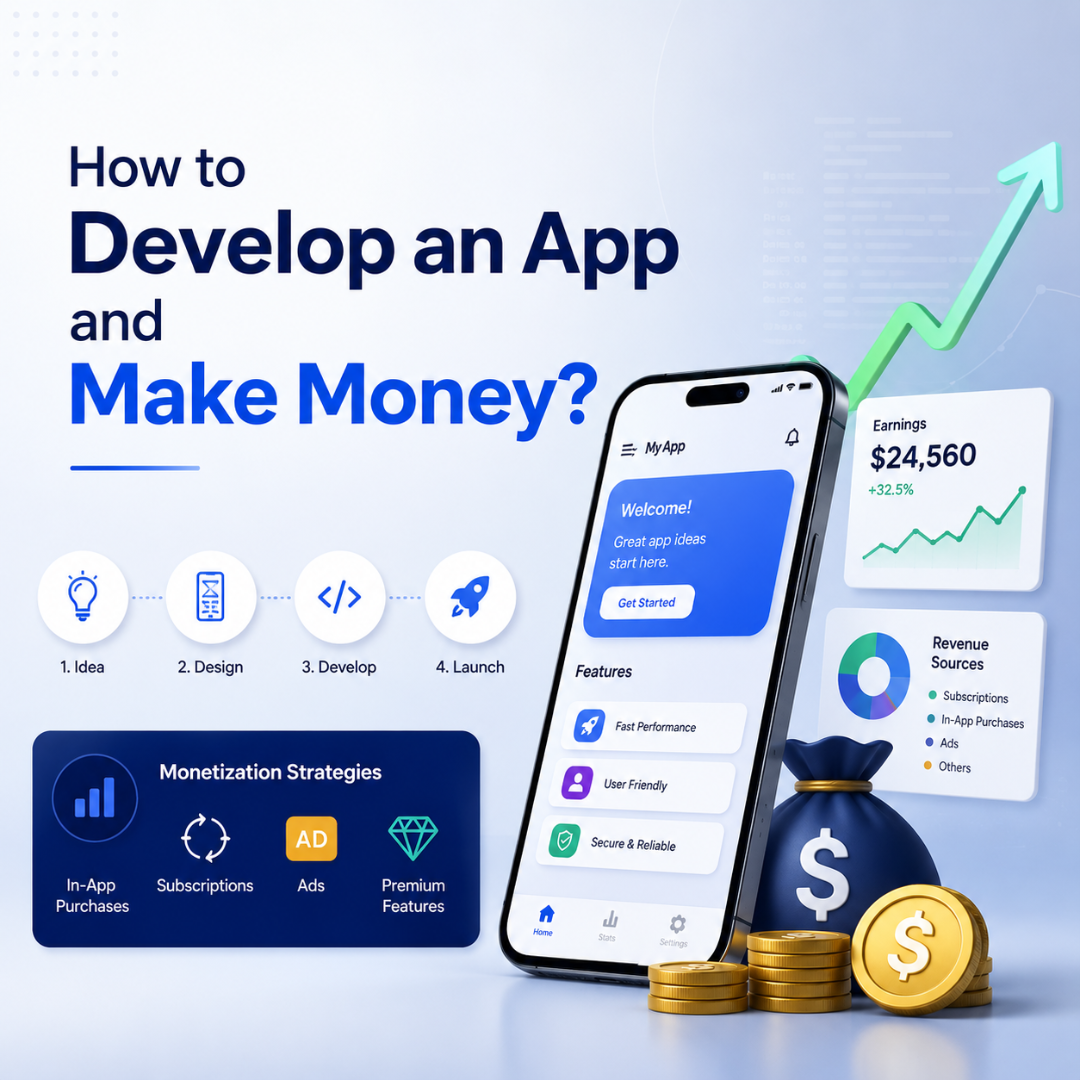
How to Develop an App and Make Money in 2026?
The introduction of mobile app is a milestone in the world of mobile technology. Developing a successful revenue generating mobile app is the distinctness of mobile app developer. How mobile app can be a revenue generator? You need perfect answer, find it below point by point.
Double your customer experience, double your profit:
The success of any business depends on its customer satisfaction. Avoid your customers going online to find your products, offer them a highly interactive mobile app to enhance their shopping experience. If your customers have your app, they receive instant notifications on special and limited period offers. It helps them to grab their desired product or service instantly at attractive price and you to double your profit.
» Premium version:
Studies show that free apps are highly profitable comparing paid apps. Since people don’t show much interest in paid apps, paid apps are not good for businesses those have a specific customer base. You can limit your app free for some period or some features. If your app succeeds to create an impression on app users, they will surely purchase the premium version for more attractive features. It will increase both popularity of your app and your revenue.
» One-time paid apps:
If your business or existing app has already gained the attention of mobile users, you can offer one-time paid apps. Users pay only once before downloading your app and updates and feature additions will be free of cost. Paid apps with additional features is a hybrid monetization model, which could be embraced by users if your mobile is a unique one like WhatsApp. If you want to develop WhatsApp kind app, you should be clever enough in choosing a well-versed mobile app development company.
» Become a publisher and start earning from your app:
You’ve probably seen display ads while using apps on your smartphone. You may think, why this adds. As a potential app owner, you should think about making a considerable profit from display ads (in-app advertising). Personal information (like interests and location) you get from the app users while installing app, which is used by advertisers to display their ads in your app. You sell space in your app, advertisers pay you big amount continuously to display their ads.
» Paywalls subscription:
Paywall is one of the best ways you can make money from your app. The paywalls app business model’s success depends on both quality and quantity. Here more features are not important, but more quality and quantity content make users get hooked to your app. Paywalls allow users to access the predetermined amount of content for free and for further access, users require to sign up for paid subscription. Especially, service focused apps can get considerable profit from paywalls. Umano is the best example for making the best use of paywalls. Umano converts new stories into podcasts and makes listening interesting.
Sponsorship, an incentivized advertising model, is the latest addition to the profits list of mobile app development.
Whether that is in-app advertising or paid subscription model, proper strategy and understanding of the latest trends of mobile advertising are utmost of importance. To make use of all these possible opportunities from your mobile app, first you need to own a high quality mobile app. So, tie-up with a well-versed app developer who can understand your requirements better and show a way to make profit from your app.
Develop Mobile Applications That Bring Profit
The mobile app economy is one of the most accessible paths to scalable income — if you build with a business model in mind from day one. Here’s a comprehensive breakdown of everything you need to know.
1. Start with the right idea (not just a cool one)
The most profitable apps solve a real, recurring problem for a defined audience. Before writing a single line of code, ask:
- Is someone already paying for this? Competition isn’t bad — it proves a market exists.
- How often will users open this app? Daily-use apps (habits, finance, fitness) generate far more LTV than one-time tools.
- Can I reach my users? A niche is only profitable if it’s reachable — through app stores, communities, or paid channels.
High-profit categories in 2025: productivity & AI tools, health and fitness, fintech micro-tools, language learning, and hyper-casual games.
2. Choose a monetization model before you build
This is where most developers get it wrong — they build first, then figure out how to charge. Your monetization model should shape your product decisions from the start.
Subscription (best for sustained profit) The gold standard. Monthly or annual subscriptions create predictable MRR (Monthly Recurring Revenue). Apps like Duolingo, Calm, and Headspace earn hundreds of millions annually this way. Aim for a freemium model: free core features, paid tier with meaningful upgrades.
In-App Purchases (IAP) Works exceptionally well for games and content apps. Users pay for virtual goods, levels, or one-time unlocks. The key is designing your economy so that progression feels rewarding but optional paid items genuinely enhance the experience.
Advertising Viable at scale (100K+ MAU). Rewarded ads — where users opt in for a reward — generate 5–10x higher eCPM than banner ads and don’t damage retention. Avoid intrusive interstitials in the first session; they’re the top cause of early churn.
Marketplace / Commission If your app connects buyers and sellers (gigs, rentals, services), take a percentage of each transaction. This model scales with your network, not your headcount.
3. Build lean — ship an MVP in 6–10 weeks
Your first version should do one thing brilliantly. An MVP isn’t a broken app; it’s a focused one.
Technology choices for profitability:
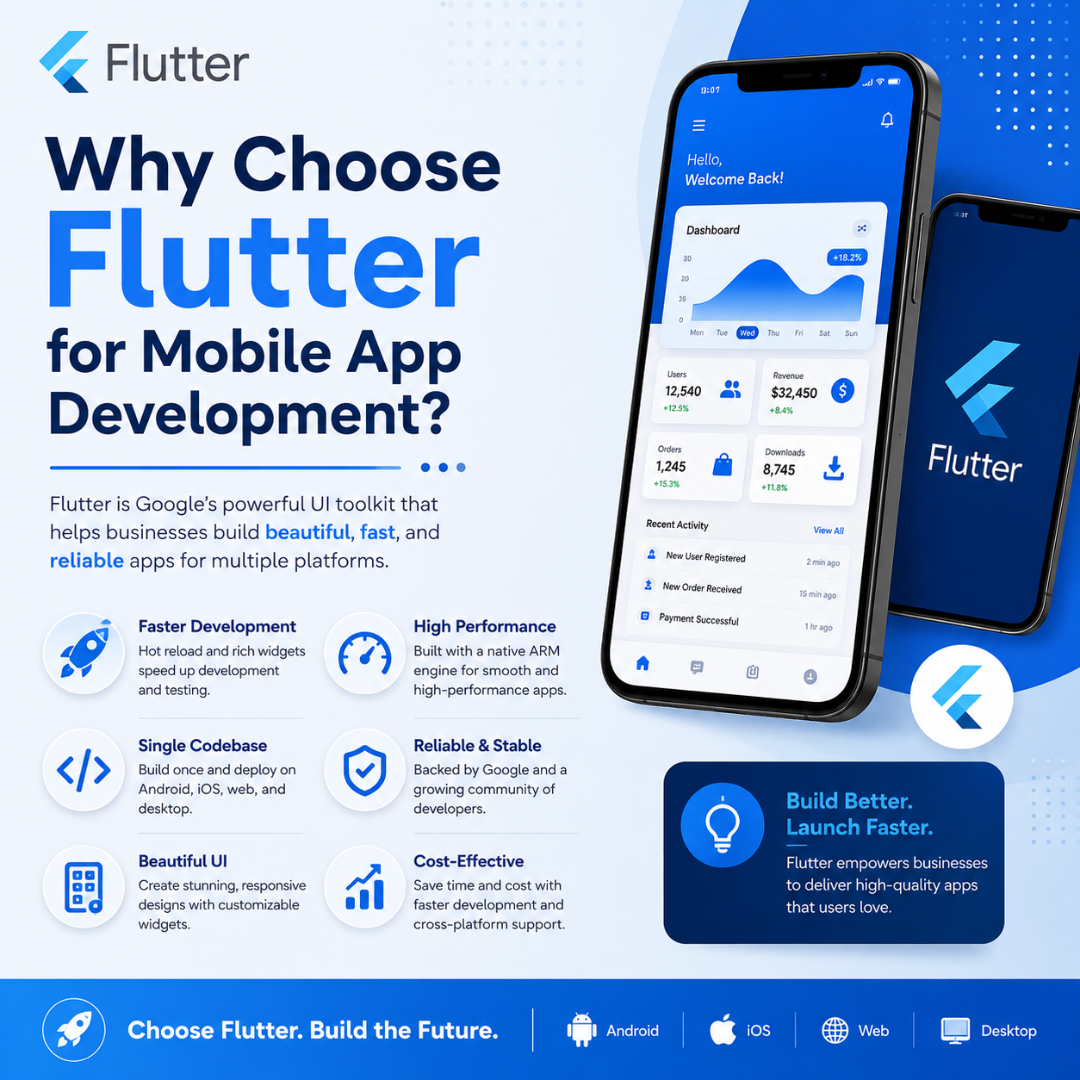
- Flutter (Dart) — single codebase for iOS + Android, near-native performance, growing ecosystem
- React Native — huge community, strong hiring pool, good for JS-familiar teams
- Swift / Kotlin — if you’re going iOS or Android native and need maximum performance (games, AR)
- No-code tools (Bubble, Glide, Adalo) — valid for validation, not for scale
Use Supabase or Firebase for backend-as-a-service to cut weeks off your backend build. Stripe handles payments globally with minimal integration work.
4. iOS vs Android: where should you launch first?
For profit-focused development, iOS first is usually the right call. iOS users have significantly higher ARPU (Average Revenue Per User) and better conversion rates on subscriptions. Android captures more volume but lower average spend.
Cross-platform first makes sense if you’re targeting emerging markets (India, Southeast Asia, Brazil) where Android dominates.
5. App Store Optimization (ASO) — your free growth engine
70% of app downloads come from App Store search. ASO is the highest-ROI marketing activity for indie developers.
Key levers:
- Title and subtitle: include your primary keyword naturally
- Screenshots and preview video: these drive conversion more than anything else — show the value in 3 seconds
- Ratings: proactively prompt happy users (after a positive action, not randomly)
- Localization: translating your store listing into 5–10 languages can 2–3x downloads at near-zero cost
6. Retention is where profit is made or lost
Acquiring a user costs $1–5 (or more). Retaining them costs almost nothing. The difference between a profitable app and a money pit is retention.
Day 1 / Day 7 / Day 30 retention are your most important benchmarks. Industry averages:
- Day 1: ~25%
- Day 7: ~10%
- Day 30: ~5%
Beat these through: strong onboarding that delivers value in the first 60 seconds, smart push notifications tied to user behavior (not generic broadcasts), and habit loops that bring users back daily.
7. Key metrics to track
| Metric | What it tells you |
|---|---|
| LTV (Lifetime Value) | Total revenue per user — must exceed CAC |
| CAC (Customer Acquisition Cost) | What you spend to acquire one user |
| MRR | Monthly recurring revenue — health of subscription business |
| Churn rate | % of subscribers cancelling monthly — target below 5% |
| DAU/MAU ratio | Engagement depth — above 20% is healthy |
| ARPU | Average revenue per user — segmented by platform/country |
8. Realistic revenue expectations
Building a profitable app takes 12–24 months for most independent developers. Here’s a rough trajectory:
- Months 1–3: MVP + launch. Focus on feedback, not revenue.
- Months 4–6: First 1,000 users, refine onboarding, activate monetization.
- Months 7–12: Hit $1K–$5K MRR if retention is strong. Begin paid acquisition.
- Year 2+: $10K–$50K+ MRR is achievable with a strong niche and subscription model.
The apps that succeed long-term treat user value as the product — the revenue is a byproduct of genuinely solving a problem better than the alternatives.
The bottom line
A profitable mobile app isn’t a lottery ticket — it’s a product business. Validate the market, design your monetization model upfront, launch lean, obsess over retention, and iterate on data. The roadmap above applies whether you’re a solo developer or a small team.
Frequently Asked Questions: Monetizing Your Mobile Application
General Strategy
1. Can a mobile app really become a significant revenue generator?
Absolutely. A well-developed app is a milestone in mobile technology that acts as a continuous profit engine. By enhancing customer experience and utilizing various monetization models—such as in-app ads, subscriptions, or premium versions—an app can significantly increase a business’s bottom line.
2. How does an app improve my overall business profit?
An app doubles your profit by doubling the customer experience. Instead of forcing customers to search for you online, an app provides a direct, interactive channel. Instant notifications about limited-time offers allow customers to act immediately, driving higher sales volume.
Monetization Models
3. Should I launch a free or a paid app?
Studies show that free apps are often more profitable because they attract a larger user base. You can offer a “Freemium” model where the basic app is free, but users pay for a Premium version to unlock more attractive, advanced features once they are hooked.
4. When is a “One-Time Paid” model appropriate?
One-time paid apps work best for businesses that already have a massive following or a unique utility (similar to the early days of WhatsApp). In this model, users pay once to download, and all future updates are free.
5. How does in-app advertising work?
By becoming a publisher, you sell space within your app to advertisers. Using non-sensitive user interests and location data, advertisers display relevant ads to your users, providing you with a continuous stream of ad revenue.
6. What are “Paywalls” and how do they generate income?
A paywall allows users to access a specific amount of content for free, after which they must sign up for a paid subscription for further access. This model is highly effective for service-focused apps where quality and quantity of content are high (e.g., Umano).
Development & Success
7. What is sponsorship in mobile apps?
Sponsorship is an incentivized advertising model and is one of the latest ways to generate profit. It involves partnering with brands to provide specific content or rewards within your app experience.
8. Do I need a specific type of developer to ensure my app is profitable?
Yes. To maximize profit, you need to partner with a well-versed developer who understands your specific requirements and the latest trends in mobile advertising. A high-quality app is the foundation of every successful monetization strategy.
9. How do I get started with a high-quality app?
You should tie-up with an award-winning mobile app development company. Expert developers can help you choose the right monetization model—whether it’s in-app ads or subscriptions—tailored to your business goals.