
How AI Audits Improve Business Decision-Making and Drive Smarter Growth?
Artificial intelligence has quickly moved from an experimental technology to some sort of strategic business tool. Companies across industries use ai to automate process steps, sift through data, enhance customer experiences, and also uncover fresh growth chances. But here’s the catch, successful AI adoption is more than just dropping in new tools and hoping it sticks. Quite a few organizations end up using ai audit services, to basically review what they already have in place, spot improvement opportunities, and make sure these technology investments actually line up with real business goals.
Still, many organizations invest in AI solutions without really knowing if those technologies bring measurable value. They might run into poor data quality , vague targets, inefficient models, or solutions that feel helpful at first but then create limited impact after implementation.
This is basically where AI audits matter. With an AI audit, businesses get a chance to check their current AI abilities, spot where things need a bit of fine tuning, and set up a more steady direction for what they spend going forward. Instead of picking tools based on guesses , companies can run an AI audit to see what actually does work, what still needs adjusting, and where AI can bring the largest returns in a grounded, repeatable manner. It is kind of like getting a real look under the hood, not just relying on assumptions that sound good, but don’t always hold.
What Is an AI Audit?
AI audit represents a formal assessment of a company’s approach to AI development, implementation, management, and alignment with business needs.
As opposed to a purely technical examination of an AI system’s performance, an audit of the mentioned type aims at assessing not just whether an AI system functions properly but also whether it brings any value to the business.
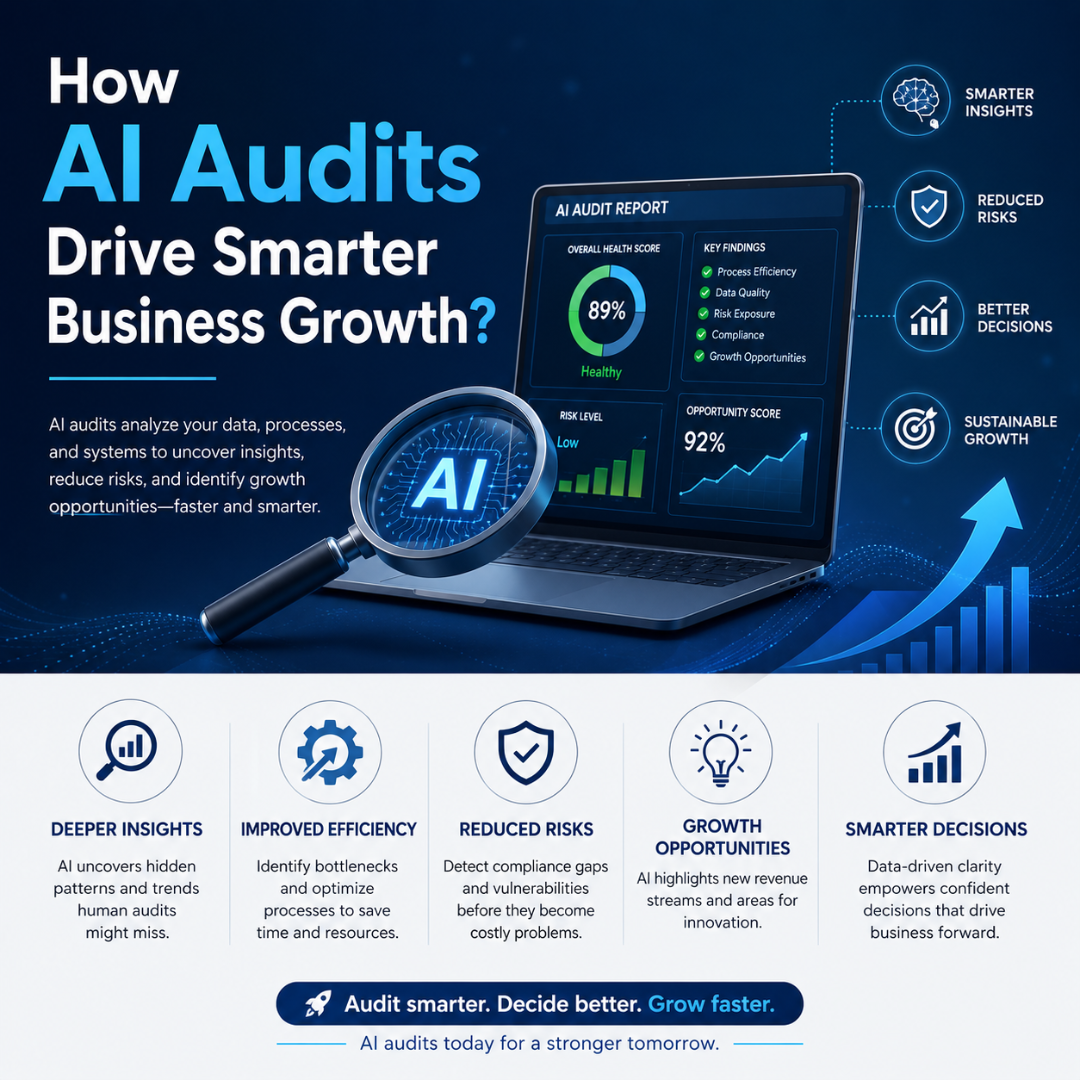
The major areas evaluated through an AI audit are:
- Alignment of AI strategy – how effectively the company employs AI to tackle its business challenges;
- Readiness of data – the quality and usefulness of the data that is used in order to apply AI;
- Performance of models – how reliable and stable the performance of the models is;
- Security and compliance – whether AI app solutions are secured and comply with all the regulations;
- Business impact – whether AI expenses bring any benefits for efficiency enhancement or profit creation.
This kind of analysis helps evaluate the overall maturity of the company’s AI.
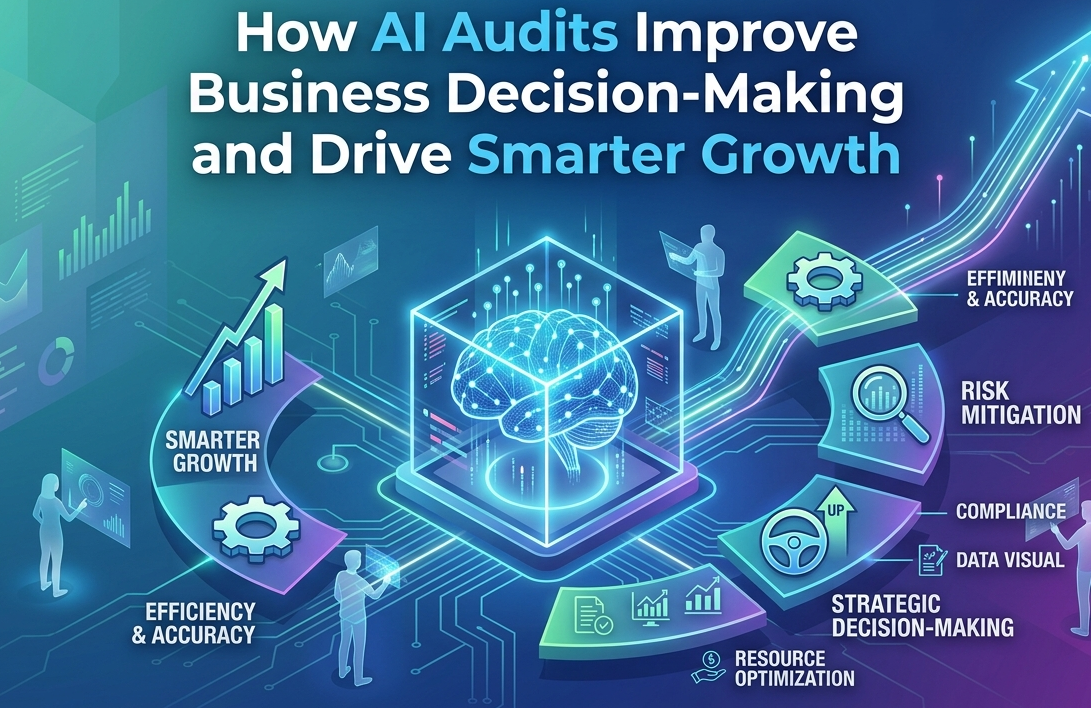
Why AI Audits Matter for Better Business Decisions?
AI can mess a bit with major business decisions , like forecasting how customers might act or streamlining internal processes. But really, those choices only end up being as useful as the AI systems behind them, you know.
An AI audit helps a company move away from pure uncertainty toward something more organized. It gives visibility in a practical way, so leaders can set investments in the right order , lower exposure to risk, and build AI solutions that actually back up long term objectives.
» Identifying Where AI Creates Real Business Value
One of the biggest challenges businesses face is figuring out where AI can actually bring the most impact. A lot of companies adopt AI because of market trends, but then they sorta stop and dont link it to specific business goals, and that’s where it gets messy.
An AI audit helps uncover worthwhile AI opportunities. It does this by looking into workflows, the usual obstacles, and the expected end result. Then companies can direct their resources toward solutions that sharpen efficiency, strengthen the customer experience, or upgrade decision-making , instead of putting money into AI without a clear reason.
» Improving Data Quality and AI Accuracy
Data quality really, affects how well AI performs. Even really advanced AI models don’t give dependable results when they are built on incomplete, outdated, or just inconsistent information.
An AI audit helps organizations spot data problems, check on current data methods , and strengthen the whole basis for AI solutions. With better data, you get more accurate forecasts, smarter suggestions , and automated choices that feel less random, more deliberate.
» Reducing Risks Before Scaling AI Solutions
In addition to introducing new possibilities for organizations, the implementation of AI involves several new threats. Enterprises that deploy AI solutions without an adequate assessment of possible risks may encounter security, compliance, or performance issues.
Main risks associated with the use of AI may consist of the following:
- biases or inaccuracies of AI outcomes
- weak data protection
- poorly explained AI-based decisions
- security risks
- complexity of AI maintenance over time
AI auditing allows companies to find out about all possible risks in advance.
For instance, enterprises working within such sectors as healthcare and finance must make sure that AI works properly with the sensitive data. The process of audit will help them detect compliance risks and offer some recommendations on how to improve data protection and access control.
The evaluation of risks is particularly vital when AI solutions are used as a part of decision making.
» Optimizing Existing AI Solutions
Launching an AI solution is basically just the start, right after it’s live. Over time the models can feel less capable, business requirements may shift, and there might also be new chances to make things better, or at least smarter.
An AI audit helps companies figure out if what they already have is still actually useful. It can highlight bottlenecks in performance, clunky workflows, or other openings where better automation could really pay off.
Say, for example, an AI-driven recommendation engine might run smoothly at first, but later on it becomes less on point as customer preferences evolve. If you do regular reviews, businesses can notice sooner when the models need refreshing, tuning, or extra training data.
Also, AI audits support organizations in checking whether their current tech setup can handle upcoming expansion. Something that seems fine for thousands of users usually needs adjustments before it’s scaled to millions.
How AI Audits Support Different Business Teams?
AI audits are quite helpful, not just for the technical teams and the builders but also for the business leadership crowd, product managers, and those decision makers who sit above it all. In other words it’s one of those assessments that can give useful signal, even when you’re looking at strategy instead of code, and even if you’re not knee deep in systems each day.
» Business Leaders
Executives need to get a grip on if AI investments actually line up with strategic goals, because otherwise it’s mostly vibes or just a trend. With an AI audit you can gather practical visibility into current capabilities, plus those real opportunities that might be hiding in plain sight, and also which places need resources most.
Rather than putting money in AI just because the market is moving, leaders can steer decisions toward business value, tied to measurable outcomes, so the results aren’t vague.
» Product Teams
Product teams can use AI audit findings to spot chances for improving the user experiences and maybe, sort of, move things forward faster. In practice the audit can show which AI powered features are likely to bring the most value to customers,not just some vague benefit.
For instance, teams might notice gaps where personalization, automation,or predictive tools could be introduced, and those could actually match real user needs.
» IT Teams
Technical teams sometimes benefit from getting a clear feel for whether current infrastructure can actually handle AI initiatives. An AI audit kinda checks architecture, then it reviews integrations, security requirements, and also those technical limits that nobody talks about, until later.
This way IT teams can get ready for a smoother AI implementation, and they can steer away from hiccups when things start to scale, too.
What Does the AI Audit Process Look Like?
Even though each organization seems to have different AI needs, most AI audits kinda land in the same general stages, more or less.
1. Business Goal Assessment
The process starts sortof by getting what the business is really after, you know, understanding the goals. Then the auditors look at what the company wants to reach with AI and they also figure out which obstacles or hurdles AI should actually tackle, so not just the obvious stuff.
2. AI and Data Landscape Review
The next step is kinda about looking at what AI solutions already exist, which data sources are being used, how the technology infrastructure is set up, and how the workflows are organized. Honestly, this part helps sort of highlight current strong points, but also the limits or weak spots, in a clearer way.
3. Technical Evaluation
Specialists go over AI models system architecture, integrations and performance measurements. The idea is pretty much to see if this tech actually holds up to the business needs, not just in theory, but in the real world too.
4. Risk Analysis
The audit kind of evaluates risks that could be, around security, compliance , data quality, and then also AI reliability . It’s not just one thing though, more like a broad check.
5. Recommendations and Roadmap Creation
The last stage, delivers recommendations that are actually actionable. Teams get direction to make their current solutions better, to roll out fresh AI initiatives and also to think about which future investments are worth the most attention. It’s a kind of practical roadmap, not just abstract ideas.
Common Mistakes Businesses Make Without AI Audits
Without doing real evalution, companies often end up doing avoidable mistakes when they start using AI.
A frequent snag shows up when AI gets rolled out without those clear business goals. The tech by itself is not what creates the value, so organizations actually need to say which problems they want to crack and also, how exactly they will judge if it worked , or not.
Another hurdle is weak data preparation. If the data is spotty, incomplete , or just low quality, then AI performance can drop, and the outputs become a bit questionable or even unreliable.
Some teams also forget the ongoing side of AI monitoring. The models need continual tuning, because the business scene shifts, customer patterns change, and new data becomes available, pretty much over time.
AI Audits as a Foundation for Long-Term Growth
AI is becoming a big competitive advantage, yet to actually make it work you can’t just grab the newest tools. Companies need a real grasp of where AI slots into their strategy and daily operations, not just what the tech can do in theory.
That’s where an AI audit comes in. It gives the clarity to spot high value opportunities, tune up existing systems, cut down on avoidable risks and yes, make better technology choices. Also it tends to surface gaps before they turn into headaches.
The groups that end up benefiting the most from AI wont always be the ones adopting it the quickest. They’re usually the ones who can see where AI delivers meaningful returns, then build their overall approach around those informed decisions.
Conclusion
AI can absolutely shake up how businesses run, contend, and grow, but turning that possibility into real outcomes takes a careful, kind of reflective approach.
AI audits are where companies sort of get the actual visibility they need: to check what they can already do, spot blind spots or weak links, and map out the next investments more confidently.
When organizations line up AI efforts with business objectives, they tend to get past the “trying things out” phase, and they can build a lasting AI roadmap. Then the whole setup ends up backing sharper decisions and longer-term expansion, not just temporary experiments.